Jumping is a greeting behavior, not dominance. Dogs jump to reach our faces because that is where social information lives. Scent, expression, and tone all come from the head. The behavior is natural, but it becomes a problem when size, excitement, or muddy paws make greetings unpleasant.
Positive training does not suppress the urge to greet. It replaces jumping with a behavior that gets the dog what it wants: attention. The key is consistency across every person the dog meets.
Teach an Incompatible Behavior
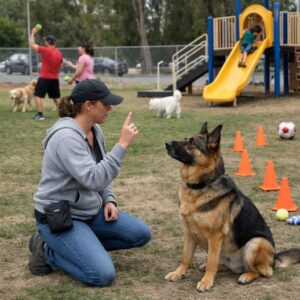
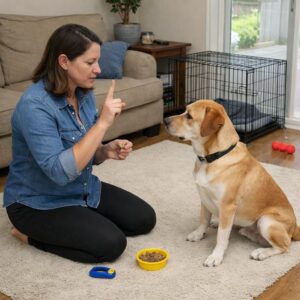
A dog cannot jump and sit at the same time. Teach a solid sit-stay before addressing jumping. Practice in low-distraction areas first. Reward the sit with calm praise, not excited squealing that revs the dog up. The sit must be reliable before it can compete with the excitement of a guest arriving.
Another option is teaching the dog to go to a mat or bed when the doorbell rings. This redirects the energy toward a specific location rather than trying to suppress it entirely. Dogs that understand where to be often settle faster than dogs left to guess.
Manage Greetings
Prevention matters more than correction. Put the dog on a leash before guests arrive. Step on the leash so the dog cannot jump. Ask guests to ignore the dog completely until all four paws stay on the floor. Even eye contact rewards jumping. Total indifference is the only message that works.
If the dog jumps while leashed, turn and walk away. The dog learns that jumping removes the person. Once the dog calms, return and try again. Repeat as many times as necessary. Some dogs need ten repetitions before the connection clicks. Patience is not optional.
Reward Four Paws on the Floor
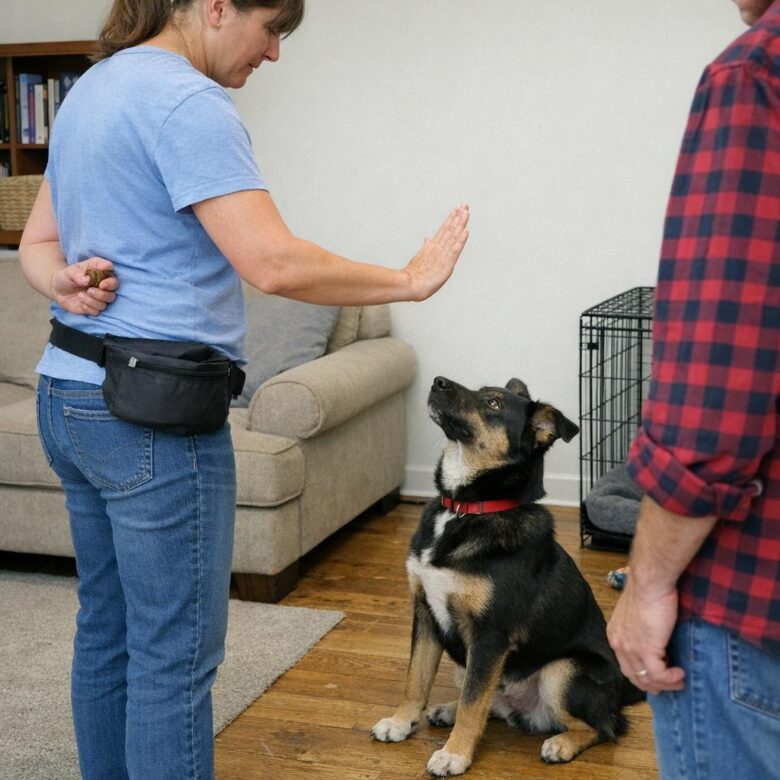
Catch the dog before it jumps. When a guest approaches and the dog keeps all paws down, mark and reward immediately. Use treats at first, then transition to calm petting and praise. The reward must arrive while the dog is still standing or sitting. Late rewards reinforce whatever the dog is doing when the treat appears, which might be jumping again.
Some dogs respond well to a default behavior like standing calmly. Others need a specific cue. Experiment to find what works for your dog’s temperament and energy level.
Practice with Cooperative Humans
Real guests are unpredictable. Practice first with family members who follow instructions. Then add friends who understand the protocol. Eventually, work with strangers in controlled settings. Each level of novelty tests the behavior more strictly.
Never punish jumping after it happens. Yelling, kneeing, or pushing the dog down can increase excitement or create fear. The dog may interpret physical contact as play. Positive training removes the reward for jumping and builds a replacement behavior that is easier and more rewarding for the dog.
When to Seek Professional Help
If jumping is accompanied by mouthing, growling, or extreme arousal that does not settle within minutes, consult a certified behaviorist. Some dogs need desensitization to greeting contexts before they can learn new behaviors. Jumping that looks playful may mask anxiety or overarousal that requires a different approach.
For building the foundational obedience that makes greeting training possible, our guide on best dog training commands every owner should teach first covers the core cues that support calm behavior around people.
Stopping jumping takes weeks, not days. Every person who greets the dog incorrectly sets progress back. Control the environment, reward calm, and stay consistent. The dog that jumps today can become the dog that greets politely tomorrow if the training is clear and the humans are patient.
The Dogs Dance Editorial Team publishes practical, beginner-friendly guides about dog training, mental stimulation, canine enrichment, tricks, and responsible routines at home. Our content is prepared for general educational purposes, with a focus on clear explanations, realistic expectations, and humane approaches to everyday dog care. The information does not replace veterinary diagnosis, treatment, or individualized guidance from a qualified animal behavior professional.