Rain, heat, snow, and busy schedules limit outdoor time. Dogs that need more exercise do not stop needing it because the weather changed. Indoor activities bridge the gap without requiring a backyard or a dog park.
The key is variety. Repeating the same hallway fetch session every rainy day creates boredom. Rotate between physical, mental, and scent-based activities to keep your dog engaged and tired.
Stair Sprints and Hallway Fetch
Stair climbing builds strength and burns energy fast. Send your dog up and down a flight while you stay at the bottom. Start with five repetitions and increase gradually. Avoid this with puppies, seniors, or dogs with joint issues. For flat homes, hallway fetch with a soft ball works similarly. Use a ball that does not bounce erratically and damage walls.
Hide and Seek
This game reinforces recall while providing mental stimulation. Hide in another room, behind furniture, or in a closet. Call your dog once and reward enthusiastically when they find you. Increase difficulty by hiding in less obvious spots or adding multiple family members to find. Dogs that struggle with recall benefit from the positive association of finding their owner.
Tug-of-War with Rules
Tug is not a dominance game. It is a structured activity that builds impulse control. Teach a solid “take it” and “drop it” cue before playing. Use a rope toy or rubber tug with a handle. Stop the game if teeth touch skin or the dog refuses to release. A dog that learns tug rules applies the same self-control to other exciting situations.
Scent Trails and Nose Work
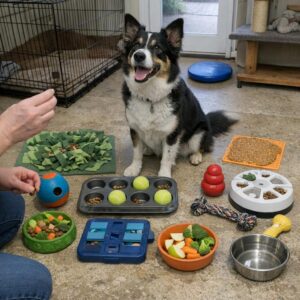
Drag a treat across the floor and hide it at the end of a trail. Let your dog follow the scent to the reward. Increase complexity by adding turns, hiding treats at different heights, or using multiple rooms. This mimics hunting behavior and tires dogs mentally without requiring much space.
Another option is the muffin tin game. Place treats in some cups of a muffin tin, cover all cups with tennis balls, and let your dog remove the balls to find the food. This builds problem-solving skills and patience.
Obstacle Courses
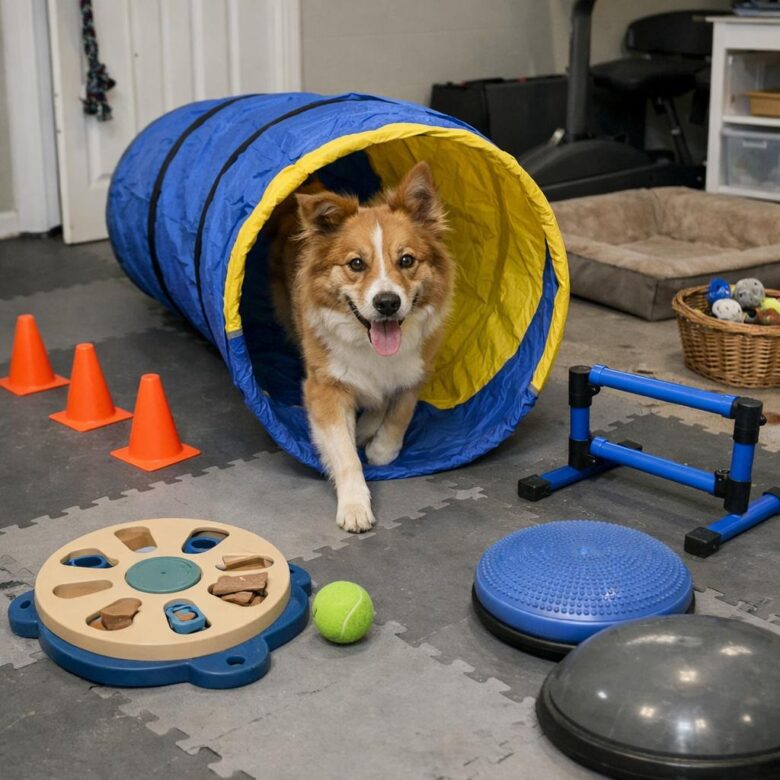
Use household items to create a simple agility course. Broomsticks balanced on books become jumps. Couch cushions become tunnels. Laundry baskets become weave poles. Guide your dog through the course with treats and praise. Change the layout every few days to prevent memorization.
Keep obstacles low and safe. Indoor agility is not about height or speed. It is about directing your dog through a sequence of tasks that require focus and body awareness.
Training and Trick Sessions
Five minutes of training tires a dog’s brain as much as twenty minutes of physical play. Work on new tricks, refine existing behaviors, or practice obedience drills in different rooms. The novelty of a new environment adds mental challenge even if the behavior is familiar.
For dogs that need more structured training guidance, our article on how to train a dog to listen better around distractions explains how to build focus indoors before testing skills outside.
Calming Activities After Exercise
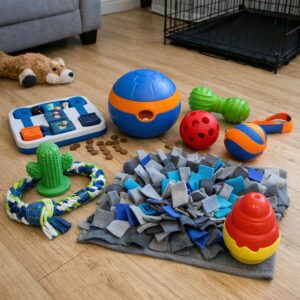
End every indoor session with a calm transition. A stuffed Kong, a lick mat, or a chew toy helps your dog shift from excited to relaxed. Skipping this step often leaves dogs restless despite physical tiredness. The brain needs time to wind down as much as the body.
Indoor exercise is not a lesser substitute for outdoor activity. It is a different tool that addresses different needs. Use it strategically during bad weather, recovery periods, or busy days. A dog that exercises its brain and body indoors remains balanced until outdoor routines resume.
The Dogs Dance Editorial Team publishes practical, beginner-friendly guides about dog training, mental stimulation, canine enrichment, tricks, and responsible routines at home. Our content is prepared for general educational purposes, with a focus on clear explanations, realistic expectations, and humane approaches to everyday dog care. The information does not replace veterinary diagnosis, treatment, or individualized guidance from a qualified animal behavior professional.