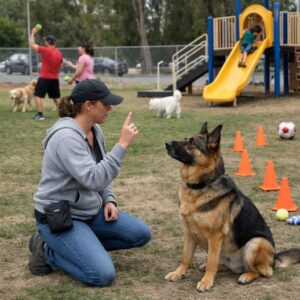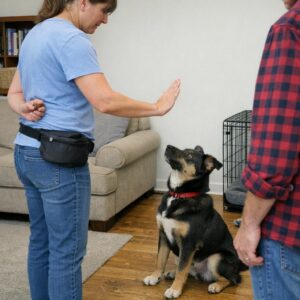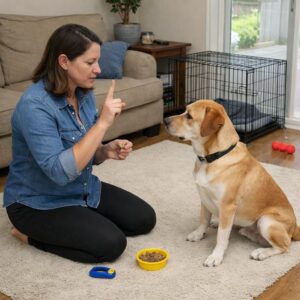
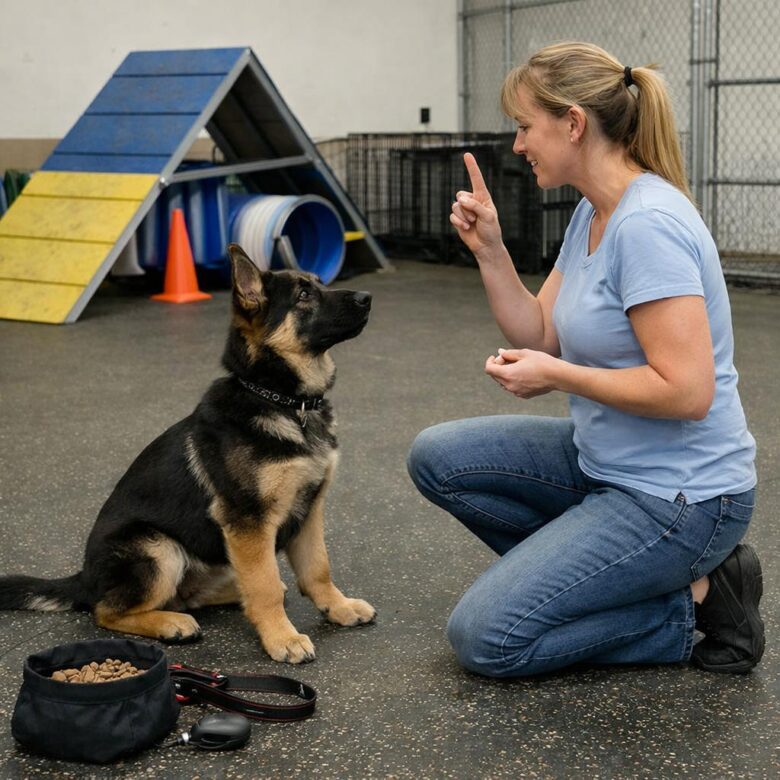
Every dog needs a vocabulary of reliable behaviors. Not dozens of tricks, but a handful of cues that keep them safe, calm, and manageable in daily life. These commands form the foundation. Everything else builds on top of them.
The order matters. Teach sit before down. Teach down before stay. Teach stay before come. Each behavior prepares the dog for the next. Skipping steps creates gaps that show up later when you need reliability under pressure.
Sit
Sit is the default behavior that replaces jumping, lunging, and rushing. A dog that sits automatically waits for the leash to attach, waits for the food bowl to lower, and waits for the door to open. It is the most versatile command in daily life.
Lure with a treat at the nose, move it over the head toward the tail. Most dogs lower their rear to follow. Mark and reward the moment the rear touches the floor. Add the verbal cue “sit” only after the behavior is consistent without guidance. Practice in ten different locations before expecting reliability in public.
Down
Down settles a dog more effectively than sit. A standing dog can spring into action. A downed dog is committed to staying. This makes down essential for veterinary visits, café patios, and crowded spaces where movement is unsafe.
Start with the dog in sit. Lure the treat straight down to the floor, then forward along the ground. The dog follows with their body, lowering into a lying position. Mark and reward the full down. If the dog pops back up immediately, reward while they are still down and add a release cue like “okay” so they know when the behavior ends.
Stay
Stay means do not move until released. It is not a position. It is a duration behavior added to sit or down. A dog that stays in a sit while you answer the door is safer than a dog that sits and then bolts.
Ask for sit, say “stay,” wait one second, mark and reward. Then two seconds. Then five. Then ten. Add distance by taking one step back, then two, then five. Add distractions by dropping a toy, opening a door, or having a family member walk past. Build one variable at a time. Combining duration, distance, and distraction too quickly causes failure.
Come
Recall is the command that saves lives. A dog that comes when called avoids traffic, escapes from dangerous dogs, and returns from wildlife chasing. It must be trained with overwhelming positivity. Never call a dog to punish them. Never call a dog to end fun. Coming when called must always lead to good outcomes.
Start indoors with no distractions. Say the dog’s name, then “come,” and back away excitedly. Reward with high-value treats, praise, and brief play. Practice ten times daily in different rooms. Then move to a fenced yard. Then a long line in a park. Gradually increase difficulty while maintaining a high success rate.
Leave It
Leave it prevents ingestion of toxins, attacks on wildlife, and fights over dropped food. It teaches impulse control. A dog that can ignore a steak on the sidewalk can ignore almost anything.
Place a low-value treat in your closed fist. Let the dog sniff, lick, and paw. The instant they back away or lose interest, mark and reward with a higher-value treat from your other hand. The message is clear: ignoring the first thing leads to something better. Gradually move the treat to the floor, then to an open hand, then to a dropped item.
Place or Settle
Place sends the dog to a specific bed, mat, or cot. It is invaluable for managing excitable greetings, meal preparation, and visitors. A dog on place is not underfoot, not jumping, and not demanding attention.
Lead the dog to the mat, lure into a down, and reward. Add the cue “place” as they step onto the mat. Reward generously for staying on the mat. Release with “okay” or “free.” Increase duration gradually. A dog that settles on place for thirty minutes while you cook dinner has learned self-control that transfers to other situations.
Release Cue
Every command needs an ending. Without a release cue, dogs guess when to move. They break stays early, jump before the leash attaches, or bolt through doors. A consistent release word like “okay,” “free,” or “all done” tells the dog the behavior is complete.
Teach the release by saying the word, then encouraging movement with a treat toss or a step backward. Reward the dog for moving after the cue, not before. Eventually, the release becomes as reliable as the commands themselves.
These six commands cover the majority of daily situations. Master them before adding tricks or advanced behaviors. A dog with solid sit, down, stay, come, leave it, and place is a dog that can navigate the world safely and calmly. The fancy stuff comes later. Safety and manners come first.
For a complete home training framework that incorporates these commands into daily routines, our guide on how to train a dog at home: a beginner’s step-by-step guide walks through the practical setup, timing, and progression from first session to reliable performance.
The Dogs Dance Editorial Team publishes practical, beginner-friendly guides about dog training, mental stimulation, canine enrichment, tricks, and responsible routines at home. Our content is prepared for general educational purposes, with a focus on clear explanations, realistic expectations, and humane approaches to everyday dog care. The information does not replace veterinary diagnosis, treatment, or individualized guidance from a qualified animal behavior professional.