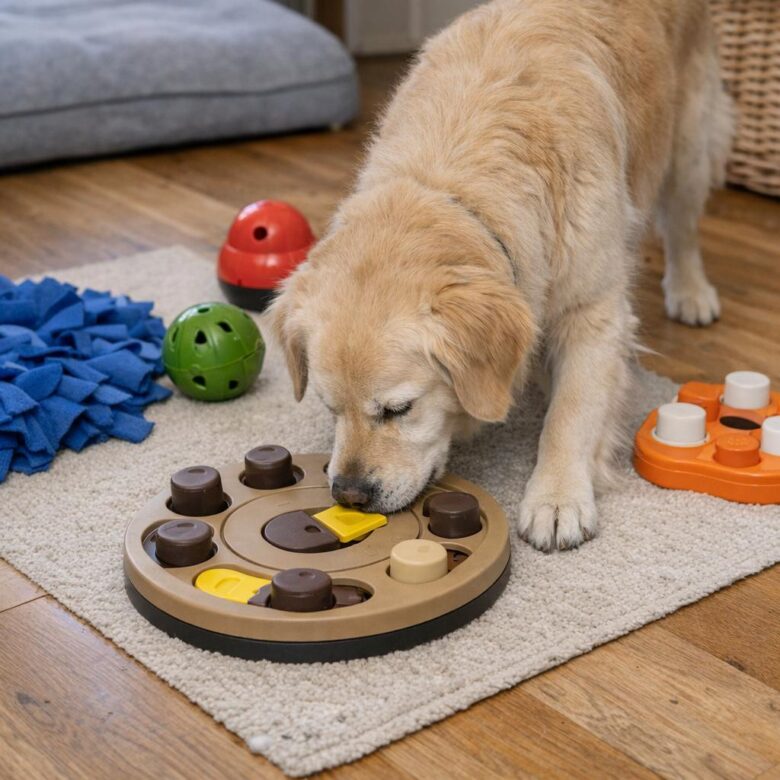
A bored dog is a destructive dog. Not because it is bad, but because it has energy and intelligence with nowhere to go. Brain games turn quiet hours into productive mental exercise. They tire the mind without requiring outdoor space, expensive equipment, or advanced training skills.
Milo used to pace the hallway on rainy afternoons. A frozen Kong stopped the pacing. A snuffle mat added variety. Within a week, he settled on his own after two short brain games instead of demanding attention for hours.
Scatter Feeding and Snuffle Mats
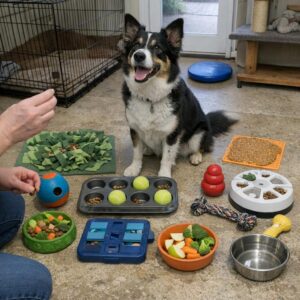
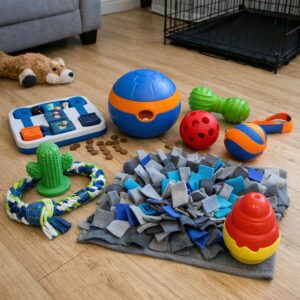
Scatter a handful of kibble across a rug or grass patch. Let your dog find each piece with its nose. This mimics natural foraging and extends a thirty-second meal into a ten-minute activity. Snuffle mats achieve the same goal with fabric strips that hide treats. Dogs bury their noses, push fabric aside, and work for every bite.
Start easy. If the dog gives up, the game is too hard. If the dog finishes in seconds, make the hiding spots trickier. Adjust difficulty to maintain engagement without frustration.
Hide and Seek
Hide somewhere in the house. Call your dog once. Reward enthusiastically when they find you. This reinforces recall while providing mental stimulation. Increase difficulty by hiding behind doors, under blankets, or in different rooms. Multiple family members can hide in sequence, turning the game into a group activity.
Dogs that struggle with recall benefit most from this game. The positive association of finding their owner builds enthusiasm for coming when called in real-world scenarios.
The Muffin Tin Game
Place treats in some cups of a muffin tin. Cover all cups with tennis balls or toys. Your dog must remove the covers to find the food. This builds problem-solving skills and patience. Start with treats in every cup so the dog wins immediately. Then reduce the number of treats so the dog must check multiple cups.
Some dogs lift the balls with their mouths. Others paw them aside. Either approach works. The goal is engagement, not a specific technique.
Shell Game
Place a treat under one of three cups. Let your dog watch. Shuffle the cups slowly. Release the dog to find the treat. This builds focus and memory. Start with one cup and no shuffling. Add cups and movement as the dog improves.
Never make the game impossible. If the dog guesses wrong repeatedly, return to an easier version. The shell game should feel challenging, not defeating.
DIY Obstacle Courses
Use household items to create a simple course. Broomsticks on books become jumps. Couch cushions become tunnels. Laundry baskets become weave poles. Guide your dog through with treats and praise. Change the layout every few days to prevent memorization.
Keep obstacles low and safe. Indoor agility is not about height or speed. It is about directing your dog through a sequence of tasks that require focus and body awareness.
Training Sessions as Brain Games
Five minutes of training tires a dog’s brain as much as twenty minutes of physical play. Work on new tricks, refine existing behaviors, or practice obedience in different rooms. The novelty of a new environment adds mental challenge even if the behavior is familiar.
For structured training ideas that work well as brain games, our guide on how to train a dog at home: a beginner’s step-by-step guide provides routines that build focus and obedience through short, engaging sessions.
Calming Activities After Mental Exercise
End every brain game session with a calm transition. A stuffed Kong, a lick mat, or a chew toy helps your dog shift from excited to relaxed. Skipping this step often leaves dogs restless despite mental tiredness. The brain needs time to wind down as much as the body.
Rotate games daily. A dog that plays the same brain game every day eventually masters it and loses interest. A dog that encounters a “new” game every few days stays engaged and challenged. Boredom is the enemy. Variety is the solution.
The Dogs Dance Editorial Team publishes practical, beginner-friendly guides about dog training, mental stimulation, canine enrichment, tricks, and responsible routines at home. Our content is prepared for general educational purposes, with a focus on clear explanations, realistic expectations, and humane approaches to everyday dog care. The information does not replace veterinary diagnosis, treatment, or individualized guidance from a qualified animal behavior professional.