Most dogs can master simple commands at home when training feels clear, fun, and rewarding. Easy tricks like “sit,” “shake,” “spin,” and “roll over” do more than impress friends. They build focus, confidence, and trust between you and your dog.
The secret is not long sessions or fancy equipment. It is timing, tiny rewards, and short practice bursts your dog actually enjoys. Start with one trick, practice in a quiet room, and build from there.
Why Positive Reinforcement Works Faster
Positive reinforcement tells your dog exactly which behavior earns a reward. Instead of guessing what “no” means, your dog learns that sitting, spinning, or giving paw makes good things happen. That clarity speeds up learning, especially at home where distractions are fewer but still present.
Timing matters more than most owners realize. A clicker or marker word like “yes” marks the correct action the instant it happens. Follow immediately with a small treat, praise, or a favorite toy. Reward effort early, then raise the standard once your dog understands the trick.
- Use soft, pea-sized training treats to avoid overfeeding.
- Train for three to five minutes at a time, especially with puppies.
- Fade treats gradually by replacing some rewards with praise or play.
Step-by-Step: Teaching Shake
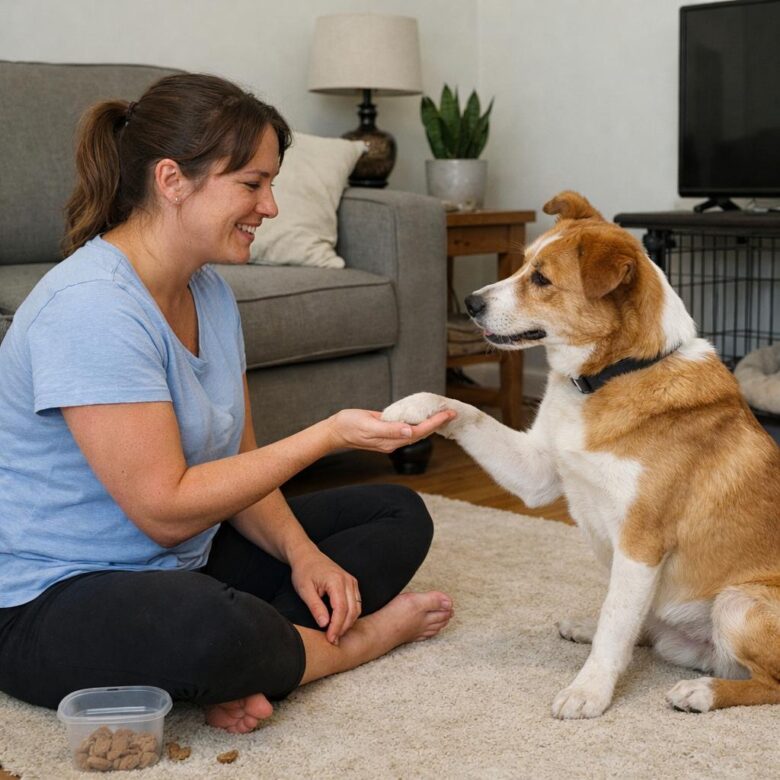
Hold a treat in your closed fist near your dog’s chest. Most dogs sniff, lick, then paw at your hand. The instant the paw lifts, say “yes,” reward, and repeat. Once the paw lift becomes predictable, add the verbal cue “shake” just before presenting your hand. Practice until your dog responds to the cue without needing the treat lure.
Step-by-Step: Teaching Spin
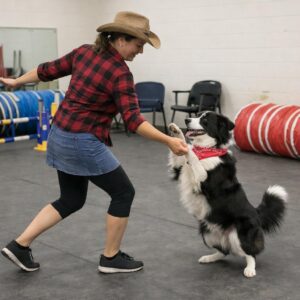
Lure your dog in a circle with a treat at nose level. Move slowly so your dog follows without jumping. Mark and reward after a full rotation. Add the cue “spin” once the movement is smooth. Practice in both directions to build body awareness and prevent dizziness from repetitive same-direction spins.
Step-by-Step: Teaching Roll Over
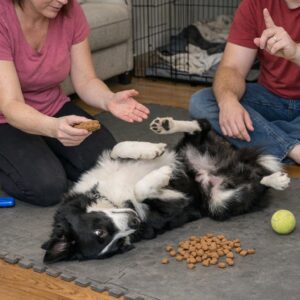
Start with your dog in a down position. Hold a treat near their shoulder and lure their head sideways. Most dogs shift weight to follow the treat. Continue the lure over their shoulder so they roll onto their side, then onto their back. Mark and reward each small step. Do not rush the complete motion. Build it in pieces over several sessions.
Practice on a yoga mat or carpet with good traction. Rolling on slippery tile frustrates dogs and slows progress.
Common Mistakes That Slow Progress
Training too long is the biggest error. Most dogs learn faster in five to ten minute sessions than in thirty-minute drills where they get tired and start guessing. Unclear timing is another issue. A simple clicker or marker word makes your training much clearer and more consistent.
Repeating commands teaches your dog to wait for multiple cues instead of responding the first time. Say the cue once, wait three seconds, then guide if needed. Skipping easy wins also hurts progress. Moving to advanced tricks too quickly weakens confidence and creates frustration.
For a breakdown of the most common errors beginners make and how to avoid them, our guide on dog trick training mistakes beginners should avoid covers practical corrections that will speed up your progress.
Setting Up for Success
Train before meals when food rewards have more value. Choose a quiet room with low distractions. Use a non-slip surface. Have your treats ready before starting. End each session while your dog is still engaged, not when they are bored or exhausted.
Keep a training log if you work on multiple tricks. Note what your dog learned, what needs more practice, and what frustrated them. This helps you adjust future sessions and spot patterns in your dog’s learning style.
The right trick is the one your dog can enjoy learning with you today. Start small, stay patient, and celebrate clear progress rather than perfection. A dog that learns happily becomes a dog that learns eagerly.
The Dogs Dance Editorial Team publishes practical, beginner-friendly guides about dog training, mental stimulation, canine enrichment, tricks, and responsible routines at home. Our content is prepared for general educational purposes, with a focus on clear explanations, realistic expectations, and humane approaches to everyday dog care. The information does not replace veterinary diagnosis, treatment, or individualized guidance from a qualified animal behavior professional.