Training a dog at home does not require a professional facility, expensive tools, or prior experience. It requires consistency, timing, and an understanding of how dogs learn. Most behavioral problems stem from unclear communication, not stubbornness. Fix the communication and the behavior follows.
This guide covers the essential framework for home training. It applies to puppies, adult rescues, and senior dogs adjusting to new routines. Adjust pace and difficulty to your dog’s age, health, and prior experiences.
Establish a Training Space
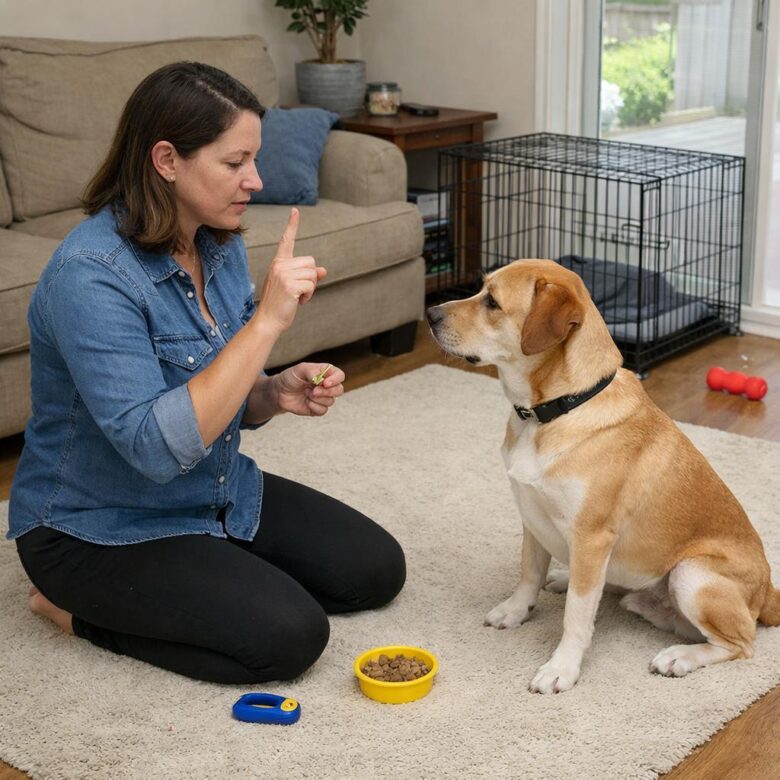
Choose one quiet room with minimal distractions. A living room corner, a hallway, or a kitchen space works. Use the same area for the first few weeks. Dogs associate locations with activities. A consistent training space signals focus time.
Remove temptations before starting. Pick up toys, food bowls, and anything the dog might prefer over your treats. Close blinds if outdoor movement distracts. Control the environment so the only interesting thing is you.
Gather Basic Supplies
You need treats, a marker, and a leash. Treats should be small, soft, and high-value. Pea-sized pieces work for most dogs. A clicker or a verbal marker like “yes” bridges the gap between behavior and reward. A leash provides control for dogs that wander or get overstimulated.
A treat pouch keeps rewards accessible. Fumbling in pockets breaks timing. Timing matters more than treat size. A reward delivered within one second creates clear associations. A reward delivered five seconds later confuses the dog about what they are being paid for.
Choose One Behavior to Start
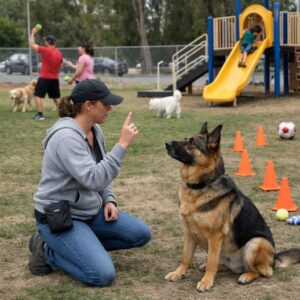
Begin with sit. It is natural for most dogs, easy to lure, and useful in daily life. Hold a treat at your dog’s nose, move it slowly over their head toward their tail. Most dogs lower their rear to follow the treat. Mark and reward the moment the rear touches the floor.
Practice ten repetitions, then stop. End while the dog is still engaged. Three short sessions per day beat one long session. A dog that practices sit for five minutes in the morning, afternoon, and evening learns faster than a dog that drills for thirty minutes once daily.
Add the Verbal Cue
Only add the cue after the behavior is consistent. Say “sit” just before luring. Repeat ten times. Then say “sit” and wait two seconds before luring. If the dog sits without the lure, mark and jackpot reward. If not, lure again and try tomorrow.
Never repeat the cue. Say it once, wait, then guide if needed. Repeating “sit, sit, sit” teaches the dog to wait for the third repetition. One cue, one response. That is the standard.
Build Duration and Distance
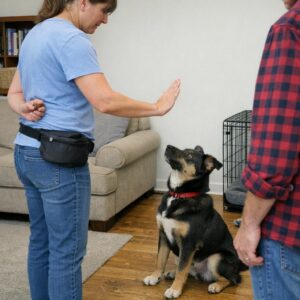
Once your dog sits on cue, add duration. Ask for sit, wait one second, mark and reward. Then two seconds. Then five. Then ten. Add a release cue like “okay” or “free” so the dog knows when the behavior ends. Without a release, dogs guess when to move and often guess wrong.
Add distance next. Take one step back after the sit. Then two. Then five. If the dog breaks, reduce distance and rebuild. Change only one variable at a time. Adding duration and distance simultaneously overwhelms most dogs.
Introduce Distractions Gradually
Move to a slightly busier room. Practice sit while a family member walks past. Then practice near a window. Then practice outside on a quiet street. Each new environment tests the behavior more strictly. Reward generously for success in harder locations.
A dog that sits reliably in the kitchen may need dozens of repetitions before sitting reliably at the park. This is normal. Dogs do not generalize well. They learn cues in specific contexts and need practice to apply them broadly.
Move to New Behaviors
After sit is solid, add down, stay, come, and leave it. Teach each behavior separately using the same lure-mark-reward sequence. Do not chain behaviors until each one is reliable alone. A dog that knows sit and down individually will learn sit-stay-down-stay faster than a dog taught the chain from the start.
For a structured list of the core commands every dog needs, our guide on best dog training commands every owner should teach first breaks down the essential cues and their practical applications in daily life.
Track Progress
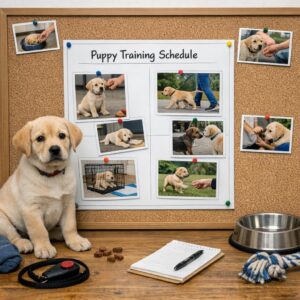
Keep a simple log. Note what you worked on, how many repetitions, and whether the dog succeeded or struggled. Patterns emerge quickly. Some dogs learn sits faster in the morning. Some behaviors regress before they stabilize. A log helps you adjust timing and difficulty without guessing.
Home training succeeds when it becomes part of daily routine. Ask for sit before meals, down before leash attachment, and stay before door openings. Every interaction is a training opportunity. A dog that practices thirty times daily in real contexts learns faster than a dog that practices only during formal sessions.
The Dogs Dance Editorial Team publishes practical, beginner-friendly guides about dog training, mental stimulation, canine enrichment, tricks, and responsible routines at home. Our content is prepared for general educational purposes, with a focus on clear explanations, realistic expectations, and humane approaches to everyday dog care. The information does not replace veterinary diagnosis, treatment, or individualized guidance from a qualified animal behavior professional.