The right toys do more than entertain. They challenge problem-solving, burn mental energy, and prevent destructive behaviors born from boredom. A dog that works for its food is a dog that settles down faster afterward.
Not every toy suits every dog. A heavy chewer destroys flimsy puzzle feeders in minutes. A cautious dog avoids loud or unpredictable toys. Match the toy to your dog’s temperament, size, and chewing style.
Puzzle Feeders
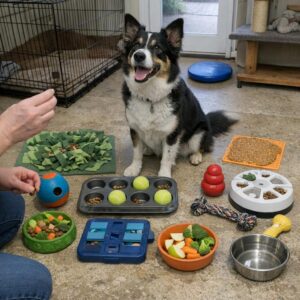
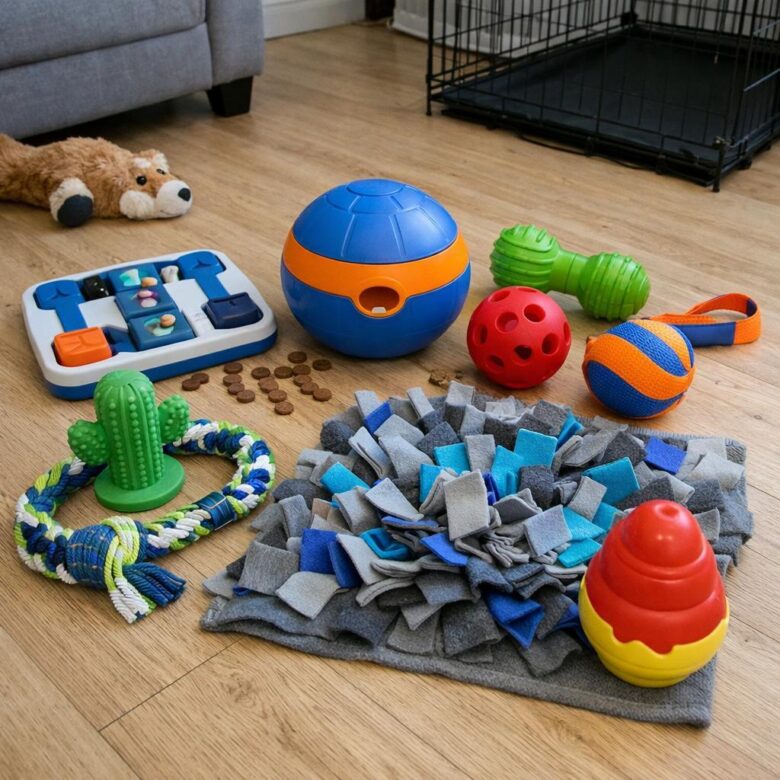
Puzzle feeders turn meals into tasks. Dogs must slide compartments, lift flaps, or spin layers to reach kibble. Start with simple two-step puzzles and increase difficulty as your dog improves. If the puzzle is too hard, the dog gives up. If it is too easy, the dog finishes in seconds and looks for the couch to chew.
Popular options include Nina Ottosson puzzles and Kong Wobblers. The Wobbler is particularly useful for fast eaters. It dispenses food slowly as the dog bats it around, extending a five-minute meal into twenty minutes of active play.
Durable Chew Toys
Chewing is a biological need, not a bad habit. Dogs chew to relieve stress, clean teeth, and exercise jaw muscles. Offer durable rubber toys like Kong Classics, Goughnuts rings, or Nylabone chews. Freeze a stuffed Kong with peanut butter and kibble for a longer-lasting challenge.
Inspect chew toys weekly. Replace any toy with cracks, missing chunks, or exposed stuffing. A dog that swallows large pieces risks intestinal blockage.
Fetch and Tug Toys
Active play builds physical fitness and reinforces training cues. Use balls with textured grips for easy carrying, or frisbees designed for soft catches. For tug-of-war, choose rope toys with sturdy knots or rubber handles that withstand pulling without fraying.
Always teach a reliable “drop it” cue before intense tug sessions. This prevents resource guarding and keeps the game structured rather than chaotic.
Scent and Foraging Toys
Snuffle mats mimic grass foraging. Dogs bury their noses in fabric strips to find hidden treats. This satisfies natural hunting instincts without requiring outdoor space. Lick mats spread soft food across textured surfaces, encouraging slow consumption and calming anxious dogs through repetitive tongue movement.
Rotate scent toys to maintain novelty. A snuffle mat used daily becomes predictable. Hide it for two days, then reintroduce it with higher-value treats.
Interactive Electronic Toys
Some dogs respond well to automated ball launchers or motion-activated treat dispensers. These work best for independent play when you are busy. However, they should not replace human interaction. A dog that only plays with machines misses the social bonding that toys are meant to strengthen.
Choosing the Right Toy
Consider your dog’s age, size, and chewing intensity. Puppies need softer toys for developing teeth. Senior dogs need gentler options that do not strain aging jaws. Heavy chewers need industrial-grade rubber, not plush squeakers.
Supervise new toys until you know how your dog interacts with them. Some dogs tear soft toys apart and swallow stuffing. Others carry plush toys gently like prized possessions. Know your dog before leaving it alone with any toy.
The best toy collection includes variety. Offer one puzzle, one chew, one active play item, and one scent toy each week. Rotate them to prevent habituation. A dog that expects the same toy every day eventually ignores it. A dog that finds a “new” toy in the basket every few days stays engaged longer.
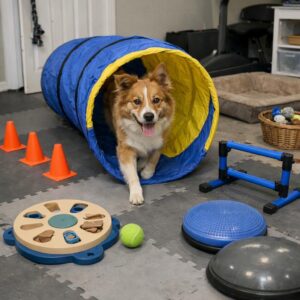
For dogs that need more structured indoor exercise beyond toys, our guide on best indoor activities for dogs that need more exercise covers practical routines that complement toy-based play.
The Dogs Dance Editorial Team publishes practical, beginner-friendly guides about dog training, mental stimulation, canine enrichment, tricks, and responsible routines at home. Our content is prepared for general educational purposes, with a focus on clear explanations, realistic expectations, and humane approaches to everyday dog care. The information does not replace veterinary diagnosis, treatment, or individualized guidance from a qualified animal behavior professional.