A daily enrichment routine does not need to be complicated. Most dogs benefit from short, varied activities that engage their nose, brain, and body. The goal is not exhaustion. It is a dog that settles down calmly because its needs were met.
Start with one activity from each category below. Rotate them so your dog does not predict the same pattern every day. Predictability leads to boredom, which leads to chewing furniture, excessive barking, or restless pacing.
Scent Work
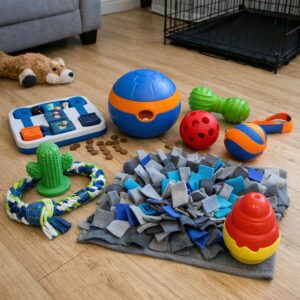
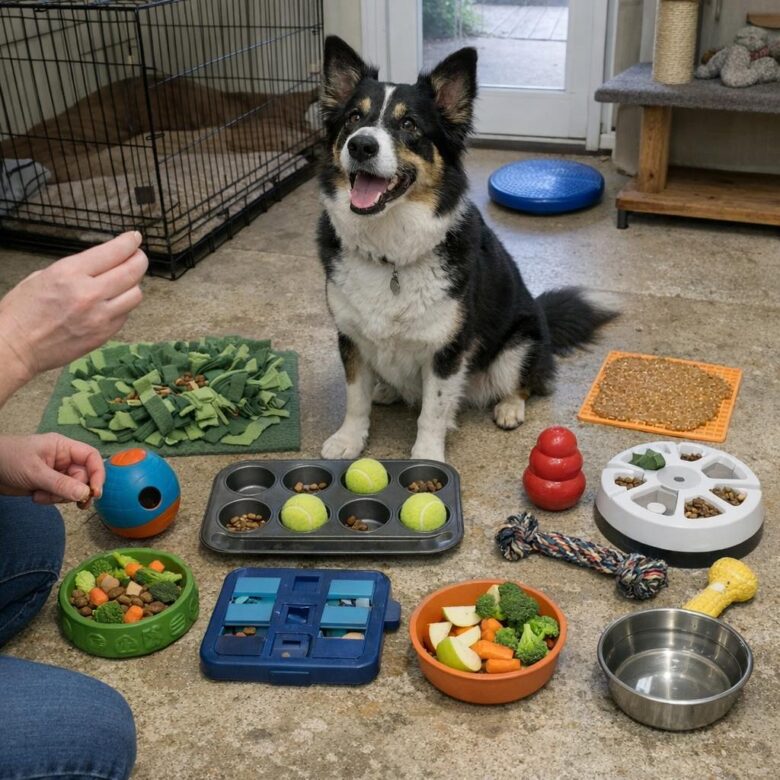
Dogs experience the world through their nose. Ten minutes of scent work tires most dogs more than thirty minutes of walking. Hide treats around one room while your dog waits in another. Use cardboard boxes, rolled towels, or snuffle mats. Start easy and increase difficulty as your dog improves.
Another option is the shell game. Place a treat under one of three cups, shuffle them slowly, and let your dog find it. This builds focus and impulse control without requiring much space.
Training and Tricks
Five minutes of trick training keeps your dog mentally sharp. Work on one new behavior or reinforce an existing one. Keep sessions short and end before your dog loses interest. If you need ideas for tricks that build focus and confidence, our guide on best dog tricks to improve focus, confidence, and bonding covers practical exercises for every skill level.
Rotate between obedience drills, trick sequences, and problem-solving games. A dog that practices “stay” in the morning and “spin” in the evening stays more engaged than one that repeats the same cue all week.
Physical Exercise
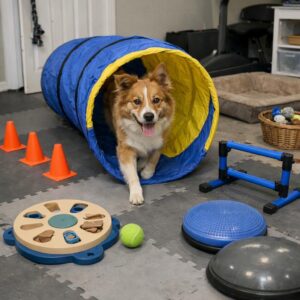
Exercise needs vary by breed, age, and health. A young Border Collie needs more activity than a senior Bulldog. Most dogs do well with two walks per day plus one structured play session. Use fetch, tug, or flirt poles for high-energy dogs. For older or injured dogs, slow walks and gentle stretching work better.
On bad weather days, indoor options matter. Stair climbs, hallway fetch, or hide-and-seek keep movement consistent without requiring outdoor access.
Chewing and Foraging
Chewing is not a luxury. It reduces stress, cleans teeth, and satisfies a natural instinct. Offer safe chew items daily: frozen carrots, bully sticks, or food-stuffed toys. Supervise new items to ensure your dog does not swallow large pieces.
Foraging toys extend mealtime. Instead of a bowl, use a Kong, lick mat, or puzzle feeder. This turns breakfast into a twenty-minute activity rather than a thirty-second gulp.
Calm Exploration
Not every activity needs structure. Give your dog time to sniff a new area, explore a cardboard box, or investigate a safe outdoor space. This unstructured exploration builds confidence and reduces anxiety in novel environments.
End each enrichment session with a calm transition. A brief settle on a mat or a few minutes of quiet chewing helps your dog shift from excited to relaxed.
Sample Daily Schedule
- Morning: 15-minute walk with sniffing freedom, breakfast in a puzzle feeder
- Midday: 10-minute training session, one new trick or obedience drill
- Afternoon: 15-minute scent game or foraging activity
- Evening: 20-minute walk or play session, calm chewing before bed
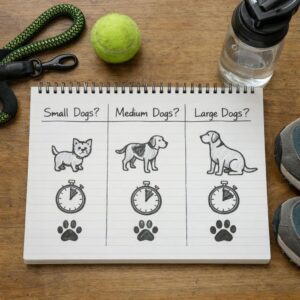
Adjust this schedule to your dog’s age, energy, and health. Puppies need shorter, more frequent sessions. Senior dogs need gentler activities with more rest between them.
Signs Your Routine Is Working
A dog with adequate enrichment settles easily, sleeps soundly, and shows fewer destructive behaviors. You will notice less demand barking, less counter surfing, and more relaxed body language throughout the day.
If your dog still seems restless after a full routine, increase mental challenges rather than physical exercise alone. A tired body with an underworked brain often creates more problems than it solves.
Build your routine gradually. Start with one or two activities, add variety over time, and observe what your dog responds to best. The right routine is the one your dog can sustain happily every day.
The Dogs Dance Editorial Team publishes practical, beginner-friendly guides about dog training, mental stimulation, canine enrichment, tricks, and responsible routines at home. Our content is prepared for general educational purposes, with a focus on clear explanations, realistic expectations, and humane approaches to everyday dog care. The information does not replace veterinary diagnosis, treatment, or individualized guidance from a qualified animal behavior professional.