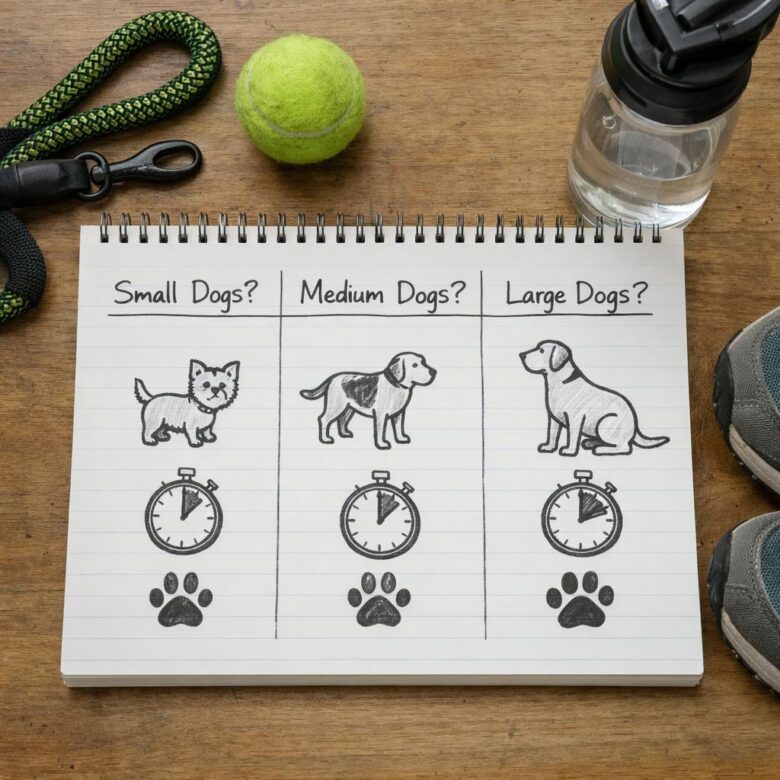
Daily exercise needs vary more than most owners realize. A Labrador puppy needs different activity than a senior Greyhound. A working-line Border Collie needs different stimulation than a companion-line Cocker Spaniel. Breed labels alone do not determine requirements. Age, health, temperament, and individual energy level matter more.
The common advice of “one hour per day” misleads many owners. Some dogs thrive on ninety minutes of varied activity. Others develop joint problems and behavioral issues from too much repetitive exercise. The right amount is the amount that leaves your dog tired but not exhausted, calm but not lethargic.
Puppies and Adolescents
Puppies need short, frequent sessions rather than long walks. Five minutes of structured activity per month of age, twice daily, provides a safe baseline. A four-month-old puppy benefits from two twenty-minute walks with exploration time, not a single hour-long trek that damages developing joints.
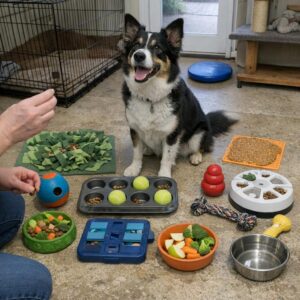
Mental exercise counts as much as physical for puppies. Training sessions, socialization outings, and gentle puzzle games tire their brains without overworking their bodies. A mentally tired puppy sleeps better and chews less furniture.
Adult Dogs
Most healthy adult dogs need sixty to ninety minutes of combined activity daily. This includes walks, play, training, and enrichment. Split this into two or three sessions for better results. One long walk in the morning with nothing else leaves many dogs restless by evening.
High-energy breeds like Australian Shepherds, Belgian Malinois, and working-line retrievers often need closer to two hours. This should include off-leash running, structured training, and scent work, not just leash walking. A dog that walks politely on leash for two hours still has energy to spare if its brain was not engaged.
Senior Dogs
Older dogs need maintenance, not reduction. Joint stiffness and muscle loss make inactivity dangerous. Two or three gentle twenty-minute walks maintain mobility and mental health. Add swimming or hydrotherapy for dogs with arthritis. Avoid high-impact activities like jumping, sprinting, or steep hills.
Watch for signs of overexertion in seniors: excessive panting, lagging behind, limping, or refusing to continue. These are not stubbornness. They are pain signals that require adjustment.
Health Conditions
Dogs with heart conditions, obesity, or respiratory issues need veterinary guidance before starting or increasing exercise. Brachycephalic breeds like Bulldogs and Pugs cannot tolerate intense activity in heat. Dogs recovering from surgery need controlled, gradual reintroduction to movement.
Always consult your veterinarian if your dog has health limitations. Generic exercise advice does not account for individual medical needs.
Signs Your Dog Needs More
A dog with insufficient exercise shows predictable behaviors: demand barking, pacing, destructive chewing, counter surfing, and rough play that ignores social cues. These are not training problems. They are energy problems. Increase mental and physical activity before hiring a behaviorist.
Signs Your Dog Gets Too Much
Overexercised dogs develop chronic fatigue, joint injuries, and behavioral shutdown. They may sleep excessively, lose enthusiasm for walks, or develop anxiety around exercise equipment. More is not always better. Quality and variety matter more than duration alone.
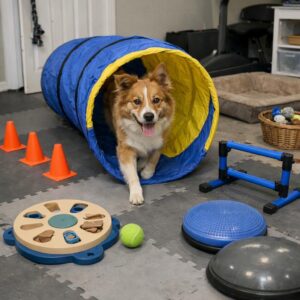
For practical ways to meet your dog’s exercise needs when outdoor time is limited, our guide on best indoor activities for dogs that need more exercise covers structured routines that maintain fitness and mental health inside the home.
Build a balanced routine that includes walking, training, play, and rest. Observe your dog’s response and adjust weekly. The right exercise plan is the one your dog recovers from happily, not the one that leaves them sore and stressed.
The Dogs Dance Editorial Team publishes practical, beginner-friendly guides about dog training, mental stimulation, canine enrichment, tricks, and responsible routines at home. Our content is prepared for general educational purposes, with a focus on clear explanations, realistic expectations, and humane approaches to everyday dog care. The information does not replace veterinary diagnosis, treatment, or individualized guidance from a qualified animal behavior professional.