Easy tricks are useful because they teach the human how training works.
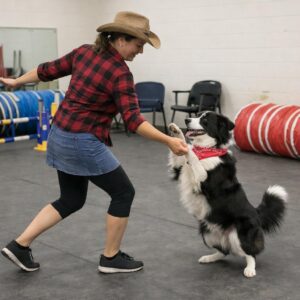
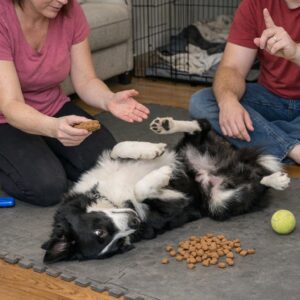
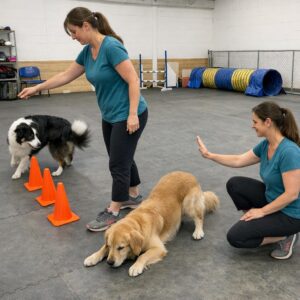
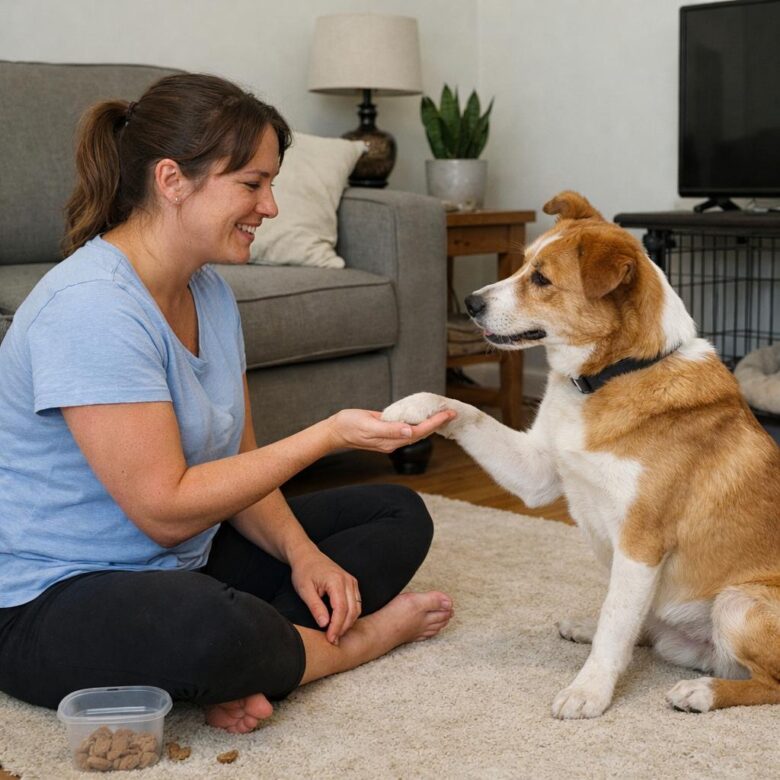
A simple nose touch can teach targeting. A paws-up pose can introduce luring. Moving toward a mat can demonstrate shaping. A naturally offered calm behavior can show how capturing works.
Once you understand those four learning tools, you are no longer limited to copying step-by-step trick instructions. You can begin breaking new behaviors into pieces your own dog can understand.
Four Ways to Create a New Behavior
VCA currently describes luring, capturing and shaping as legitimate ways to build behavior. Dogs Trust also uses targeting and progressive reward-based steps in its current training guides.
Prepare the Training Space First
- a familiar, relatively quiet room;
- secure footing;
- small rewards the dog values;
- a clear marker such as a short word;
- one behavior being trained at a time.
- the dog keeps leaving;
- the environment is too distracting;
- the dog cannot physically perform the movement comfortably;
- the dog appears increasingly frustrated;
- the current step produces almost no successful repetitions.
Recipe 1: Teach a Nose Touch
Recipe 2: Teach “Paws Up”
This progression closely matches current Dogs Trust guidance for “paws up”: introduce a stable object, lure the dog into position, reward, then repeat the hand motion without food before adding the verbal cue.
Recipe 3: Shape a Dog Toward a Mat
VCA’s current training guidance uses going to a bed as an example of shaping: first reinforcing orientation toward the bed, then movement toward it, and eventually the complete behavior.
Recipe 4: Capture a Naturally Offered Calm Position
Do Not Make Every Trick Harder Just Because It Is Working
Progress does not always mean adding more duration, distance or precision.
If the dog performs a behavior comfortably and it already serves the purpose you wanted, maintaining that simple version can be completely appropriate.
A nose touch does not need to become a ten-second hold. A paws-up pose does not need to progress to higher objects. A mat behavior does not need to become a long-distance send.
Complexity is optional.
Use Food Without Accidentally Adding a Second Dinner
FOOD
For frequent home training, part of the dog’s regular food can sometimes be reserved for reinforcement if that food is sufficiently valuable to the dog and appropriate for its diet.
Higher-value treats may still be useful for difficult training situations, but the total amount should be considered within the dog’s feeding plan.
Dogs on prescription diets, elimination diets or other medical nutrition plans should follow veterinary guidance regarding suitable rewards.
Choose the Trick That Fits the Dog
A Simple Home Training Session Can Have Four Parts
| Part | Purpose | What it might look like |
|---|---|---|
| Easy start | Establish engagement | One or two repetitions of a familiar behavior. |
| Learning block | Work on one new criterion | Targeting, luring, shaping or capturing one behavior. |
| Easy repetition | Return to clarity | Repeat a version the dog already understands well. |
| Finish | End while participation remains comfortable | Reward, release the dog and put the training materials away. |
There is no universal number of repetitions that every dog should complete. Dogs Trust recommends keeping sessions short and simple, while AAHA’s current indoor-enrichment guidance similarly recommends short trick-training sessions to avoid frustration.
Stop When Learning Quality Drops
Reduce difficulty or finish the session if the dog repeatedly walks away, stops taking normally valued rewards, becomes increasingly frustrated, starts barking or pawing at the setup, or appears physically uncomfortable.
Sudden reluctance to perform a previously comfortable movement can also have a physical cause. If pain, lameness, weakness or another health change is possible, stop treating the issue as a training problem and seek veterinary guidance.
Keep a Recipe Card for New Tricks
The Real Skill Is Learning How to Teach
Four easy behaviors can teach more than four party tricks.
Targeting teaches you to create a clear destination. Luring teaches you how to guide a movement and then remove the visible food. Shaping teaches you to reinforce progress instead of demanding the finished behavior immediately. Capturing teaches you to notice useful behavior the dog already offers.
Those concepts can later be applied to many other tricks without forcing the dog through movements it does not understand.
Start with easy behavior, but pay attention to the training method underneath it.
Teach a nose target, a stable paws-up pose, a shaped mat behavior or a naturally captured calm position. Mark successful choices clearly, reward them with something the dog values, add the cue only when the behavior is becoming predictable and keep physical comfort more important than complexity. The useful outcome is not just a dog that knows several tricks — it is a handler who understands how to teach the next one clearly.
Training and veterinary behavior references
This guide uses reward-based training methods. Individual physical limitations, dietary restrictions or meaningful behavior concerns may require veterinary or qualified professional guidance.
- American Veterinary Society of Animal Behavior — Humane Dog Training Position Statement
- VCA Animal Hospitals — Luring, Capturing and Shaping Behaviors
- Dogs Trust — Target Training
- Dogs Trust — Teaching Paws Up
- Dogs Trust — Positive Reinforcement Training
- Dogs Trust — Reward-Based Training Techniques
- American Animal Hospital Association — Indoor Enrichment and Trick Training
The Dogs Dance Editorial Team publishes practical guides about humane dog training, mental stimulation, enrichment activities, canine tricks, and responsible routines at home. Our content is created for general educational purposes and focuses on clear explanations, realistic expectations, and the everyday well-being of dogs and their families. It does not replace veterinary diagnosis, treatment, or individualized guidance from a qualified animal behavior professional.