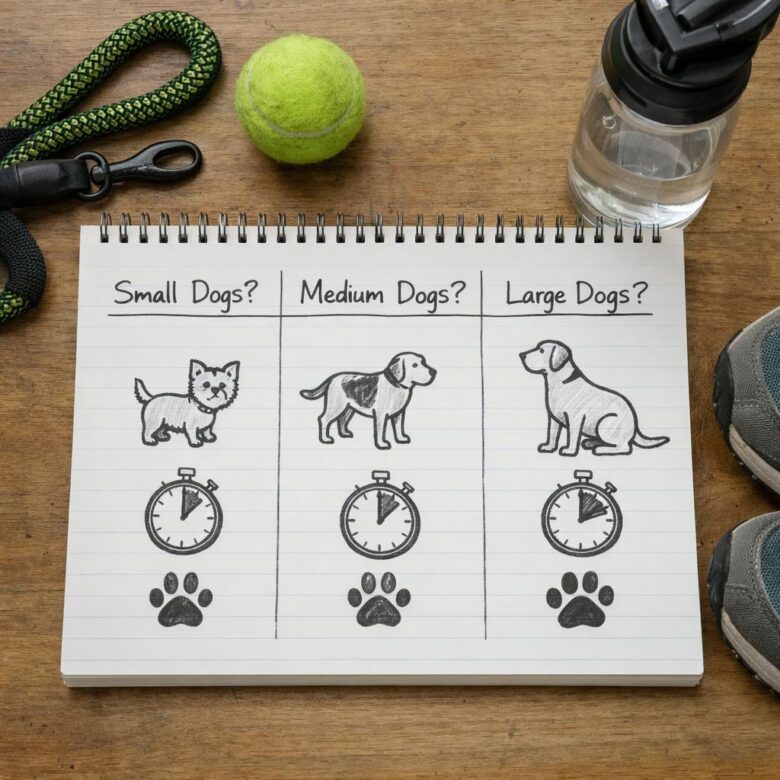
A healthy exercise plan is built around the dog, not around a generic number of minutes.
A young, lean adult dog with normal airways and good conditioning may tolerate activities that would be inappropriate for a growing puppy, an overweight dog, a senior with arthritis, or a short-nosed dog exercising in warm weather.
The useful question is therefore not simply “How long should my dog exercise?” It is “What type, intensity and duration can this dog perform comfortably and recover from normally?”
Set Five Exercise Dials Before Setting the Clock
There Is No Reliable Minutes-Per-Dog Formula
Rules such as a fixed number of minutes per month of puppy age are easy to remember, but current veterinary guidance emphasizes individual development, health and activity type rather than one universal arithmetic formula.
VCA’s current exercise guidance says the length and type of exercise depend on age, developmental stage, behavior, physical health and body structure. One dog may comfortably tolerate a long outing while another may be satisfied or physically limited after a much shorter session.
Breed can provide useful context, but it should not replace observation of the individual dog. Two dogs of the same breed can differ substantially in fitness, weight, medical history and enthusiasm for a particular activity.
Change the Exercise Plan as the Dog Ages
Exercise Type Can Matter as Much as Duration
Twenty minutes of relaxed sniffing on level ground does not create the same physical demands as twenty minutes of repeated sprinting, jumping or chasing a ball.
Short-Nosed Dogs Need a Different Exercise Calculation
VCA specifically identifies brachycephalic breeds as needing a different conditioning approach, while AAHA’s current heat-safety guidance lists short-nosed dogs among the animals at increased risk of heatstroke.
A dog that snores heavily, struggles to breathe during ordinary activity, becomes cyanotic, collapses or has known airway disease should not simply be “conditioned harder.” Veterinary assessment is appropriate.
Use the Session as Data
Instead of increasing exercise because an online chart says the dog should do more, keep a simple record of what the dog actually tolerates.
Use a Green-Yellow-Red Response Check
- comfortable participation;
- normal coordination;
- normal willingness to continue or stop;
- returns to usual behavior afterward;
- no new stiffness or lameness noticed.
- repeatedly falling behind;
- unusual reluctance;
- new stiffness afterward;
- difficulty with an activity previously tolerated;
- recovery seems noticeably slower.
- collapse;
- difficulty breathing;
- significant weakness;
- persistent or severe lameness;
- signs of heatstroke or acute distress.
This is an observation tool, not a diagnostic system. A veterinarian should evaluate concerning or persistent changes rather than having exercise increased or decreased indefinitely based on guesswork.
Body Condition Changes the Exercise Starting Point
VCA notes that overweight and obese dogs have greater risk of joint injury and can have more difficulty cooling themselves. Sudden starts, stops and sharp changes involved in intense ball chasing may be poor choices for some of these dogs.
A gradual program developed with a veterinarian can combine appropriate activity with a nutrition plan rather than attempting to exercise excess weight away through a sudden increase in strenuous activity.
Weather Can Turn a Normal Walk Into a High-Risk Session
AAHA’s heatstroke guidance, updated in May 2026, identifies excessive panting, excessive drooling, difficulty breathing, vomiting, diarrhea, weakness, stumbling, collapse and seizures among possible heatstroke warning signs.
Do Not Ignore the Ground
Exercise planning should include the surface under the dog.
Hot asphalt, concrete, sand and metal surfaces can become substantially hotter than the surrounding air and can injure paw pads. AAHA’s updated 2026 paw-safety guidance recommends checking surfaces before walking during hot conditions.
Slippery flooring also changes physical demand. Repeated sprinting or sharp turns on slick indoor floors can create unnecessary loss of traction, especially for puppies, senior dogs and dogs with orthopedic problems.
Build Variety Into the Week Instead of Maximizing Every Day
Variety can also reduce reliance on one repetitive movement pattern. A dog whose entire exercise plan consists of frantic ball chasing may be receiving a very different physical workload from a dog whose week combines walking, controlled play and exploration.
Dogs With Pain Need an Exercise Plan, Not Generic Internet Advice
AAHA’s Pain Management Guidelines include therapeutic exercise among nonpharmacologic approaches that veterinarians may use in multimodal management of canine osteoarthritis and other chronic pain conditions.
That does not mean owners should independently prescribe running, jumping or strengthening exercises to a painful dog. The appropriate movement plan depends on the diagnosis, severity and individual patient.
Similarly, dogs with heart disease, respiratory disease, neurologic disease, previous orthopedic surgery or another significant condition should have exercise restrictions and progression discussed with their veterinary team.
Know When an Exercise Change Deserves Veterinary Attention
- new or recurring lameness;
- difficulty rising or lying down;
- reluctance to use stairs or jump when this is a new change;
- coughing or breathing difficulty associated with exercise;
- unexpected weakness or collapse;
- a major decline in endurance;
- signs of pain during or after activity;
- a sudden behavioral change accompanying reduced activity.
AAHA’s pain-management guidance emphasizes that owners can notice meaningful changes by comparing a dog’s normal and abnormal behavior. Reduced activity should not automatically be dismissed as aging or lack of motivation.
Adjust One Variable at a Time
The Right Amount Is the Amount the Individual Dog Can Safely Handle
A clock cannot tell you whether a dog’s exercise program is appropriate.
Twenty minutes can be too demanding when it involves repeated sprinting on a hot day, yet a longer slow walk may be comfortable for a suitably conditioned dog in mild conditions.
Use duration as one measurement, not as the entire prescription. Track the activity, intensity, environment and recovery alongside it.
Start with the dog’s life stage, physical condition, anatomy and health. Choose an appropriate activity, account for weather and surface conditions, then observe how the dog performs and recovers. Increase workload gradually when it is well tolerated and investigate meaningful changes rather than assuming every dog of the same age or breed needs the same number of daily minutes.
Veterinary references
The exercise and safety guidance in this article was checked against veterinary sources. A veterinarian should determine activity restrictions for dogs with medical conditions, pain, mobility problems or unusual exercise intolerance.
- VCA Animal Hospitals — Healthy Exercise for Dogs
- VCA Animal Hospitals — Dog Play and Exercise
- American Animal Hospital Association — Canine Life Stages
- American Animal Hospital Association — Senior Dog Life Stage
- American Animal Hospital Association — Heatstroke Prevention
- American Animal Hospital Association — Hot Pavement and Paw Safety
- American Animal Hospital Association — Pain Management Guidelines

The Dogs Dance Editorial Team publishes practical guides about humane dog training, mental stimulation, enrichment activities, canine tricks, and responsible routines at home. Our content is created for general educational purposes and focuses on clear explanations, realistic expectations, and the everyday well-being of dogs and their families. It does not replace veterinary diagnosis, treatment, or individualized guidance from a qualified animal behavior professional.