A useful enrichment routine is not a schedule packed with activities from morning to night.
It is a flexible way to give a dog appropriate opportunities to move, sniff, investigate, solve simple problems, interact with people and rest.
The American Animal Hospital Association recommends enrichment that is appropriate to a dog’s age, breed and temperament. Health status, mobility, previous experience and individual preferences matter too.
Give the Day More Than One Type of Enrichment
AAHA’s current enrichment guidance recommends variety because different activities allow pets to use different physical, cognitive and sensory abilities.
A dog does not need to complete every category through a separate formal activity. One relaxed walk can combine physical movement, sniffing, environmental exploration and social interaction with the handler.
Build a Daily Rhythm Instead of a Rigid Timetable
The following example shows how enrichment can fit naturally around activities a household may already perform. It is not a required schedule.
Create a Small Menu Instead of Inventing New Games Every Day
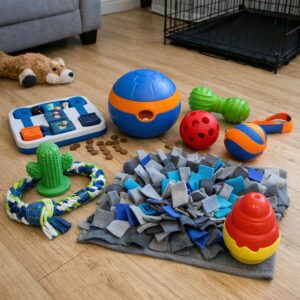
Enrichment becomes easier to maintain when the household has several familiar options and rotates between them.
Use Meals Without Quietly Adding Extra Calories
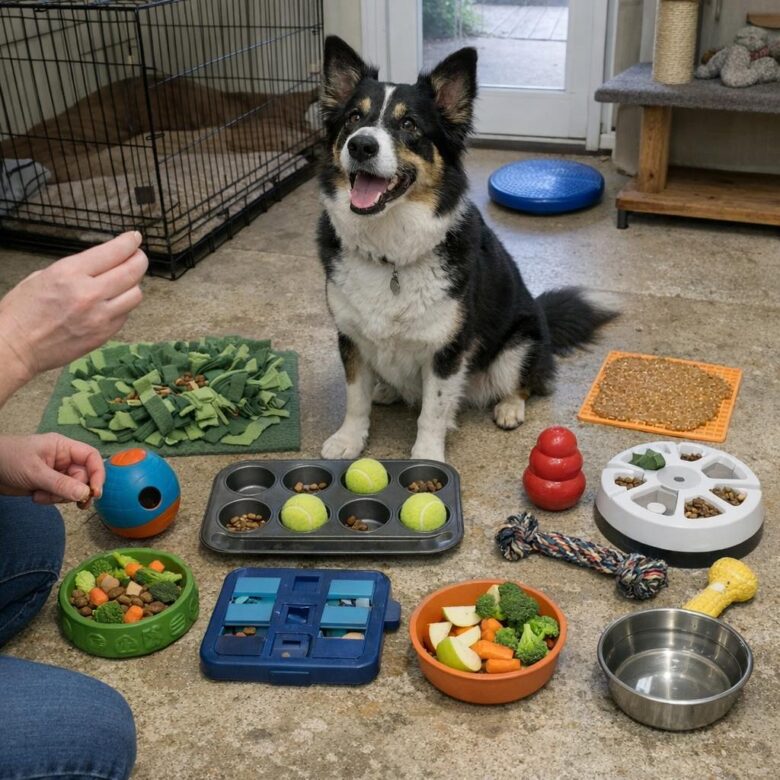
AAHA recommends using part or all of a dog’s normal daily meal in suitable food toys or foraging activities when appropriate. VCA likewise describes food puzzles, foraging and positive training as ways to provide environmental enrichment.
If every puzzle is filled with extra treats in addition to normal meals, enrichment can unintentionally increase calorie intake. Measure food from the dog’s planned daily amount when practical.
Any dietary restriction, prescription diet, food allergy or medical nutrition plan should take priority over an enrichment recipe found online.
Make the Activity Easy Enough to Succeed
Difficulty is not the same thing as enrichment.
When introducing a search game or puzzle, begin with an obvious solution. A dog that quickly understands how the activity works can then be offered a slightly more challenging version.
If a dog repeatedly walks away, becomes agitated, bites or paws frantically at the object, or cannot access the reward safely, the activity may be too difficult or simply not enjoyable for that dog.
The goal is voluntary engagement, not forcing the dog to complete a puzzle.
Safety Comes Before Novelty
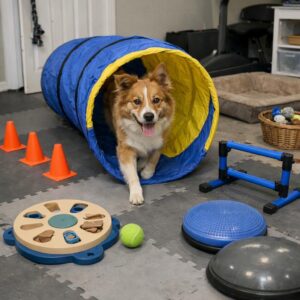
AAHA’s current indoor-enrichment guidance similarly recommends appropriately sized toys, supervision with new enrichment items, low and stable obstacles, and nonslip surfaces for indoor movement activities.
Watch the Dog Instead of Following the Plan Blindly
- approaches it voluntarily;
- can disengage without becoming frantic;
- appears comfortable interacting with the setup;
- continues to show interest when the activity is offered again.
- repeatedly avoids the activity;
- shows obvious fear or distress;
- becomes increasingly frustrated;
- tries to swallow unsafe parts;
- appears physically uncomfortable afterward.
Behavior can have more than one cause. Destructive chewing, barking, pacing or difficulty settling should not automatically be diagnosed as “boredom.” If behavior changes suddenly, becomes intense or is accompanied by physical symptoms, veterinary assessment is appropriate.
Adjust Enrichment Through the Dog’s Life
AAHA’s Canine Life Stage Guidelines emphasize that preventive care and lifestyle recommendations change with age, size, lifestyle, health status and breed.
Rotate Categories Across the Week
Variety does not require buying a new toy every day. Rotate familiar activities and change only one or two details at a time.
| Day | Explore | Think | Interact |
|---|---|---|---|
| Monday | Sniff-focused walk | Practice one familiar cue | Appropriate toy play |
| Tuesday | Different safe walking route | Simple food puzzle | Calm handling if enjoyed |
| Wednesday | Easy food search | Learn one small behavior | Interactive play |
| Thursday | Longer sniff opportunities | Rotate an existing puzzle | Quiet time together |
| Friday | Explore a suitable environment | Search game | Favorite shared activity |
| Weekend | Choose activities based on the dog’s energy, health, weather and household schedule rather than trying to compensate for a quieter week with excessive activity. | ||
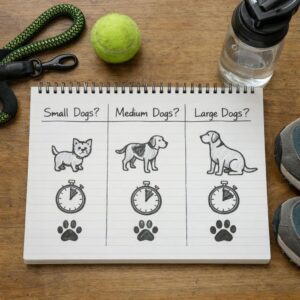
This weekly example is deliberately flexible. It does not prescribe how long each activity should last because an appropriate duration depends on the individual dog and the intensity of the activity.
Reset the Routine When It Stops Working
Review it when a puppy matures, a senior becomes less mobile, the weather changes, a veterinarian introduces activity restrictions, the household moves, or an activity consistently stops holding the dog’s interest.
Sometimes the best adjustment is not adding another activity. It may be simplifying a puzzle, allowing more sniffing on a familiar walk, reducing physical intensity or giving the dog more undisturbed rest.
Combine appropriate opportunities to move, sniff, forage, learn and interact, then watch how the individual dog responds. Use normal meals strategically when food is involved, adapt activities through different life stages and let veterinary guidance override generic routines when health or mobility is a concern.
Veterinary and animal-welfare references
The recommendations in this guide were checked against current veterinary and animal-welfare guidance. Individual medical or behavioral concerns should be discussed with an appropriate veterinary professional.
- American Animal Hospital Association — Enrichment and Mental & Emotional Wellbeing
- American Animal Hospital Association — Indoor Enrichment for Dogs
- American Animal Hospital Association — Canine Life Stage Checklist
- American Animal Hospital Association — Lifestyle and Safety Assessment
- VCA Animal Hospitals — Environmental Enrichment With Food
- VCA Animal Hospitals — Enrichment and Foraging Toys
- RSPCA — Giving Dogs Opportunities to Sniff
The Dogs Dance Editorial Team publishes practical guides about humane dog training, mental stimulation, enrichment activities, canine tricks, and responsible routines at home. Our content is created for general educational purposes and focuses on clear explanations, realistic expectations, and the everyday well-being of dogs and their families. It does not replace veterinary diagnosis, treatment, or individualized guidance from a qualified animal behavior professional.