The most useful dog toy is not necessarily the most expensive, complicated or durable-looking product on the shelf.
A toy has to fit the individual dog. Size, chewing style, age, mobility, play preferences and the way the toy will be used all affect whether it is appropriate.
Instead of starting with a brand ranking, start by deciding what job you want the toy to perform.
Step 1: Decide What Job the Toy Needs to Do
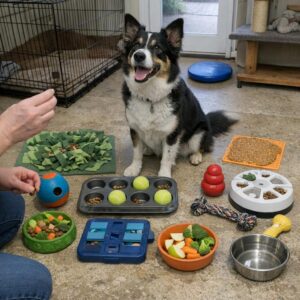
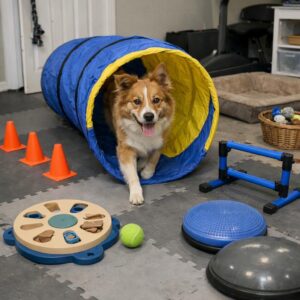
AAHA’s current enrichment guidance recommends variety across cognitive, food, sensory, physical and social enrichment rather than expecting one toy to meet every need.
A toy can overlap categories. A food-dispensing rubber toy, for example, can involve chewing, licking, manipulating and problem solving. That does not mean it replaces exercise, social interaction or every other form of enrichment.
Step 2: Give Every Toy a Safety Passport
Before deciding whether a toy belongs in the dog’s routine, write down what you actually know about it.
Size Comes Before Features
A toy can have an excellent enrichment design and still be inappropriate if it is small enough for the dog to swallow or lodge in the back of the mouth.
- sized for the individual dog’s mouth and jaw;
- large enough that accidental swallowing is unlikely;
- appropriate for the dog’s chewing style;
- easy for the owner to inspect after use.
- the entire toy can disappear into the mouth;
- pieces detach during ordinary use;
- a much larger dog has access to a small dog’s toys;
- the product is being used differently from its intended purpose.
Match the Toy Type to the Way It Will Be Used
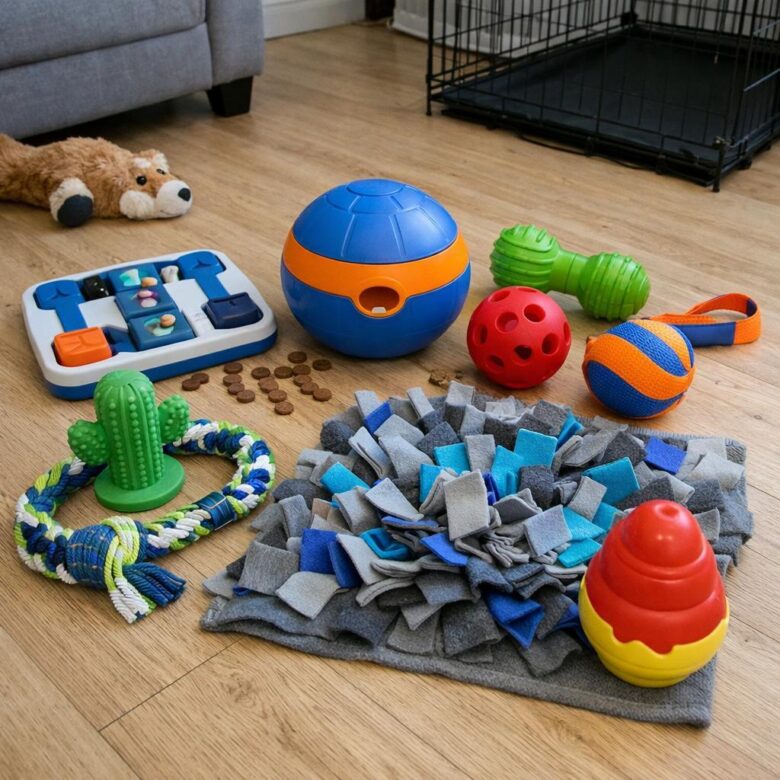
A food puzzle should be difficult enough to create engagement but not so difficult that the dog cannot figure out how to obtain the food.
Choose a size that cannot be swallowed, supervise initial use, and count the food toward the dog’s diet when appropriate.
The toy should be large enough for safe retrieval but comfortable enough for the dog to carry. Do not assume every ball-shaped object is appropriate for every mouth size.
Dogs with orthopedic, respiratory or other medical limitations may require a modified form of active play based on veterinary guidance.
A tug toy should give enough room for the human and dog to hold separate areas. Replace it when fibers, seams or material damage begin creating pieces that could be swallowed.
The dog’s interest in tugging varies individually. There is no need to force a dog to play a game it does not enjoy.
A toy that survives aggressive chewing is not automatically safe. Extremely hard objects can damage teeth.
Inspect chew toys frequently because durability changes as the object wears down.
A gentle dog may carry or interact calmly with a soft toy, while another dog may immediately dissect it and attempt to swallow stuffing, fabric or squeaker components.
The dog’s actual behavior should determine whether the toy remains available.
Puzzle Difficulty Should Increase Only After the Dog Understands the Game
VCA’s veterinary behavior guidance recommends beginning with an appropriate level of difficulty and supervising the dog while it learns how a foraging toy works.
Food Toys Need a Nutrition Plan Too
AAHA and VCA both recommend using part of a dog’s regular food in appropriate food puzzles and foraging toys when practical.
Do not automatically add a full puzzle of treats on top of the dog’s normal meals every day. Repeated enrichment calories can become meaningful, especially for small dogs or dogs on calorie-controlled diets.
Prescription diets, allergies and other dietary restrictions should be respected. Ask the veterinarian before adding unfamiliar foods when the dog has a medical nutrition plan.
“Indestructible” Is Not a Useful Safety Standard
There is no meaningful universal category of toy that is indestructible for every dog.
AAHA describes chewing styles ranging from gentle to much stronger chewers and recommends matching toy durability to the individual dog.
But harder is not always safer.
Active Toys Need Different Rules From Chew Toys
A dog that enjoys active play still needs an appropriate overall exercise plan. Toys are tools within that plan; they are not substitutes for all walking, exploration, training or rest.
Food-Filled Toys Can Change Behavior Between Dogs
VCA’s veterinary behavior guidance notes that some animals may guard food-filled or novel toys. In multi-pet homes, separate feeding or enrichment areas may be appropriate when competition is possible.
If a dog shows aggression around valuable items, avoid testing the behavior by repeatedly reaching for the toy. Seek qualified professional guidance when safety is a concern.
Audit the Toys You Already Own
You do not need to buy a new collection to improve enrichment. Take the existing toys out and sort them into three groups.
- appropriate size;
- material remains intact;
- dog uses it safely;
- serves a clear enrichment purpose;
- easy to supervise or manage appropriately.
- puzzle is too difficult;
- food portion needs adjustment;
- toy should become supervised-only;
- active game needs a safer environment;
- another toy size would be more appropriate.
- pieces are missing;
- material is splitting or fraying;
- stuffing or internal parts are exposed;
- toy can now be swallowed;
- dog repeatedly breaks off pieces;
- the item is excessively hard for safe chewing.
Use This Checklist Before Buying Another Toy
| Question | Why it matters | What to check |
|---|---|---|
| What job should it perform? | A puzzle and a tug toy solve different needs. | Choose the category before the brand. |
| Is the size appropriate? | Too-small toys can become choking or swallowing hazards. | Consider the dog’s mouth and every dog that can access it. |
| What is the dog’s chewing style? | A plush toy suitable for a gentle carrier may last seconds with another dog. | Use observed behavior, not breed stereotypes alone. |
| Can pieces detach? | Fragments, fabric, stuffing and other components can be swallowed. | Inspect seams, edges and removable parts. |
| Is it excessively hard? | Very hard chew objects can damage teeth. | Do not confuse maximum hardness with safety. |
| Does it contain food? | Enrichment calories can accumulate. | Consider using part of the normal daily food allowance. |
| How will it be supervised? | Safety can change after the dog begins chewing or manipulating it. | Observe new toys closely before deciding how they can be used. |
Know When a Damaged Toy Becomes a Veterinary Issue
The ASPCA warns that swallowed toy or chew pieces can create choking or gastrointestinal obstruction risks.
If you know or suspect that your dog swallowed a substantial piece of a toy or chew, contact a veterinarian for guidance rather than waiting for the toy to “probably pass.” The appropriate response depends on what was swallowed, its size, the dog’s size and any symptoms.
Difficulty breathing, choking, repeated vomiting, severe lethargy, abdominal pain or other acute symptoms require prompt veterinary attention.
The Dog Decides Whether the Toy Is Actually Enriching
Marketing language cannot tell you whether an individual dog will enjoy a particular toy.
One dog may spend time carefully extracting food from a puzzle. Another may prefer searching with its nose. One may enjoy controlled tug while another chooses to carry a soft toy around the house.
Observe what the dog returns to voluntarily and how it interacts with the object. A toy that is repeatedly ignored is not creating much enrichment simply because it has an “interactive” label.
Likewise, repeatedly destroying a particular toy type is useful information. It may indicate that the material or design does not fit that dog’s style of interaction.
Decide what enrichment job the toy needs to perform, match its size and material to the individual dog, introduce puzzles at an achievable difficulty, account for food used inside enrichment toys, supervise unfamiliar items and retire damaged products before they become hazards. A smaller collection of well-chosen toys can be more useful than a basket full of products selected only because they were popular online.
Veterinary and animal-welfare references
The safety and enrichment guidance in this article was checked against current veterinary and animal-welfare resources. Individual dental, dietary, behavioral or medical concerns should be discussed with an appropriate veterinary professional.
- American Animal Hospital Association — Indoor Enrichment and Toy Safety
- American Animal Hospital Association — Enrichment for Dogs
- American Animal Hospital Association — Chew Toy Safety
- VCA Animal Hospitals — Enrichment and Foraging Toys
- VCA Animal Hospitals — Food-Based Environmental Enrichment
- ASPCA — Position Statement on Dog Chews and Treats
- ASPCA — Canine Enrichment and Supervision
The Dogs Dance Editorial Team publishes practical guides about humane dog training, mental stimulation, enrichment activities, canine tricks, and responsible routines at home. Our content is created for general educational purposes and focuses on clear explanations, realistic expectations, and the everyday well-being of dogs and their families. It does not replace veterinary diagnosis, treatment, or individualized guidance from a qualified animal behavior professional.